Netratarpan Ayurvedic Therapy is a time-tested eye care treatment rooted deeply in classical Ayurveda, valued for its nourishing and restorative impact on vision and ocular health. At Dr. Rakhee Pandita Ayurvedic Clinic & Panchakarma Centre, this therapy is practiced with traditional precision and clinical insight, combining ancient wisdom with professional expertise. Netratarpan is more than a soothing eye ritual; it is a specialized therapeutic approach designed to strengthen the eyes, balance doshas affecting vision, and address both preventive and corrective eye care needs.
What is Netratarpan in Ayurveda?
The term Netratarpan comes from two Sanskrit words: Netra (eyes) and Tarpan (nourishment). True to its name, the therapy focuses on deeply nourishing the ocular tissues. According to Ayurvedic principles, the eyes are primarily governed by Alochaka Pitta, a subtype of Pitta dosha responsible for visual perception. Lifestyle strain, excessive screen exposure, poor sleep, stress, and improper diet can disturb this delicate balance, leading to dryness, fatigue, irritation, or diminished visual clarity.
Netratarpan works by delivering medicated ghee directly to the eyes, allowing therapeutic herbs to penetrate the ocular structures in a controlled and safe manner. This localized oleation calms aggravated Pitta and Vata dosha in the eye region while strengthening ocular muscles, nerves, and tissues.
Why Ghee Plays a Central Role
Medicated ghee is not chosen randomly. In Ayurveda, ghee is considered chakshushya—beneficial for the eyes. It has a unique ability to carry herbal properties deep into tissues due to its sukshma (subtle) and vyavayi (fast-spreading) qualities. When infused with eye-supportive herbs such as Triphala, Yashtimadhu, or Shatavari, the ghee becomes a potent medium for rejuvenation.
This nourishment helps counter dryness, cools inflammation, and improves lubrication of the ocular surface. Unlike artificial eye drops, ghee-based formulations work holistically, addressing the root imbalance rather than offering surface-level relief.
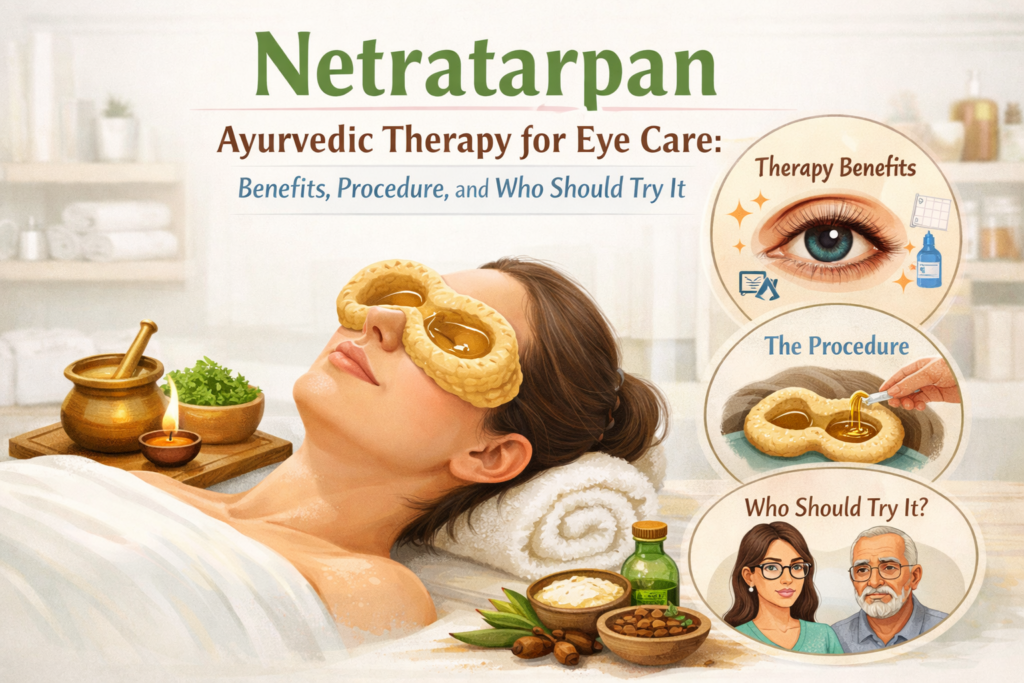
Step-by-Step Procedure of Netratarpan
At Dr. Rakhee Pandita Ayurvedic Clinic & Panchakarma Centre, Netratarpan is performed under professional supervision, following classical protocols to ensure safety and efficacy.
-
Preparation of the Patient
The individual is advised to rest adequately and avoid eye strain before the session. A brief facial massage may be done to relax surrounding muscles and improve circulation. -
Formation of the Eye Boundary
A leak-proof boundary is created around both eyes using a soft dough made from black gram flour. This acts as a reservoir to hold the medicated ghee securely in place. -
Pouring of Medicated Ghee
Warm, medicated ghee is gently poured into the dough well until the eyes are fully submerged. The person is asked to keep the eyes open and close them intermittently, allowing the ghee to coat all ocular surfaces. -
Retention Phase
The ghee is retained for a specific duration, which varies based on age, condition, and doshic imbalance. This phase allows maximum absorption and nourishment. -
Removal and Cleansing
After the allotted time, the ghee is carefully removed, and the eyes are gently cleaned. Herbal decoctions may be used for final cleansing if required. -
Post-Therapy Care
Rest is advised after the session. Exposure to bright light, screens, dust, or wind is restricted for a few hours to allow the eyes to settle.
Eye Care Benefits of Netratarpan
Netratarpan offers multi-layered benefits, making it valuable for both preventive care and supportive management of eye disorders.
Relieves Dry Eyes and Irritation
The therapy provides intense lubrication, making it especially beneficial for individuals experiencing dryness due to prolonged screen use, air-conditioned environments, or aging.
Reduces Eye Strain and Fatigue
Professionals working long hours on computers often experience heaviness and tiredness in the eyes. Netratarpan relaxes ocular muscles and reduces strain effectively.
Supports Visual Clarity
By nourishing optic nerves and ocular tissues, the therapy may help enhance sharpness of vision and reduce early signs of visual कमजोरी related to Vata-Pitta imbalance.
Calms Inflammation and Burning Sensation
Conditions associated with excess heat in the eyes—such as redness, burning, or sensitivity to light—respond well to the cooling and soothing nature of medicated ghee.
Delays Degenerative Changes
Regular Netratarpan is traditionally believed to slow age-related degeneration of the eyes by maintaining tissue strength and moisture.
Promotes Overall Eye Rejuvenation
Beyond symptom relief, the therapy acts as a Rasayana for the eyes, supporting long-term ocular wellness.
Who Should Consider Netratarpan?
This therapy is suitable for a wide range of individuals, particularly those exposed to modern lifestyle stressors.
-
IT professionals, designers, writers, and students with heavy screen exposure
-
Individuals experiencing dry eye syndrome, eye fatigue, or blurred vision
-
People with frequent headaches linked to eye strain
-
Individuals with early-stage refractive discomfort or age-related dryness
-
Those seeking preventive eye care through Ayurveda
-
Professionals in visually demanding fields such as surgeons, artists, and researchers
Who Should Avoid or Delay the Therapy?
While Netratarpan is gentle, it is not universally suitable in all conditions.
-
Active eye infections such as conjunctivitis
-
Severe cold, sinus congestion, or fever
-
Immediately after eye surgery unless advised by an Ayurvedic physician
-
Excess Kapha-related eye discharge without prior cleansing therapies
A detailed consultation at Dr. Rakhee Pandita Ayurvedic Clinic & Panchakarma Centre ensures the therapy is tailored appropriately, including preparatory or supportive treatments if required.
Frequency and Course of Therapy
The number of sessions depends on the individual’s constitution (Prakriti), eye condition, and therapeutic goal. Some may benefit from a short course of 3–5 sessions, while others may be advised periodic sessions as part of a preventive eye care routine. Seasonal administration, especially during Pitta-aggravating periods, is also recommended in classical texts.
Integrating Netratarpan with Lifestyle Care
For sustained results, Netratarpan works best when supported by conscious eye-friendly habits. Adequate sleep, mindful screen usage, regular eye breaks, and a diet rich in cooling, nourishing foods complement the therapy. Herbal formulations and internal Rasayana may also be suggested by the physician to strengthen results from within.
A Holistic Eye Care Approach
At Dr. Rakhee Pandita Ayurvedic Clinic & Panchakarma Centre, Netratarpan is not performed as an isolated procedure. It is part of a holistic eye care strategy rooted in classical Panchakarma principles. Each session reflects careful diagnosis, authentic preparation of medicated ghee, and hands-on clinical expertise developed through years of practice.
For industry professionals, wellness practitioners, and Ayurvedic enthusiasts, Netratarpan stands as a remarkable example of how localized therapies can deliver profound systemic benefits when applied with precision and respect for tradition. It represents Ayurveda’s refined approach to preserving one of the most vital sensory organs—the eyes—through nourishment rather than suppression.
By addressing both the functional and energetic aspects of vision, Netratarpan continues to remain a trusted therapy for those seeking natural, sustainable eye care rooted in authentic Ayurvedic practice.